NeoPixel RGBW LEDs w/ Integrated Driver Chip - Warm White (~3000K - White Casing - 10 Pack)
NeoPixel RGBW LEDs w/ Integrated Driver Chip - Warm White (~3000K - White Casing - 10 Pack)
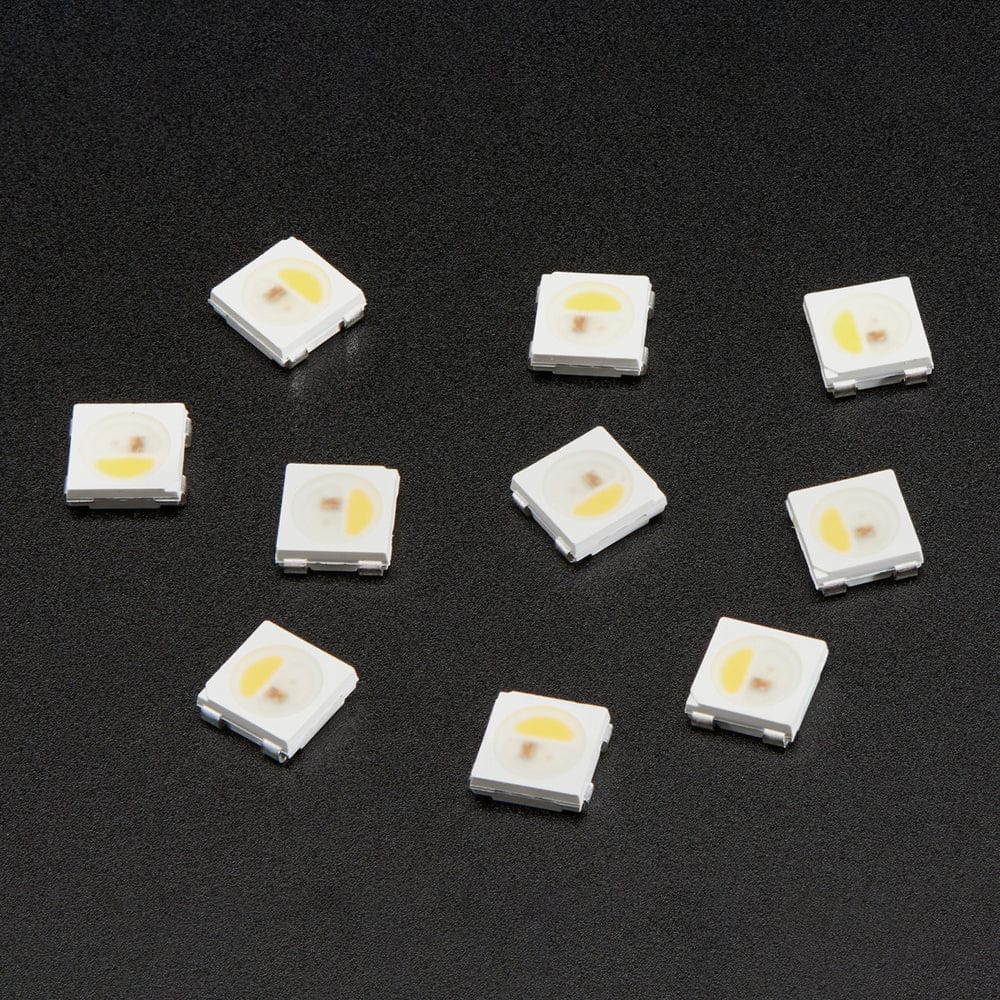
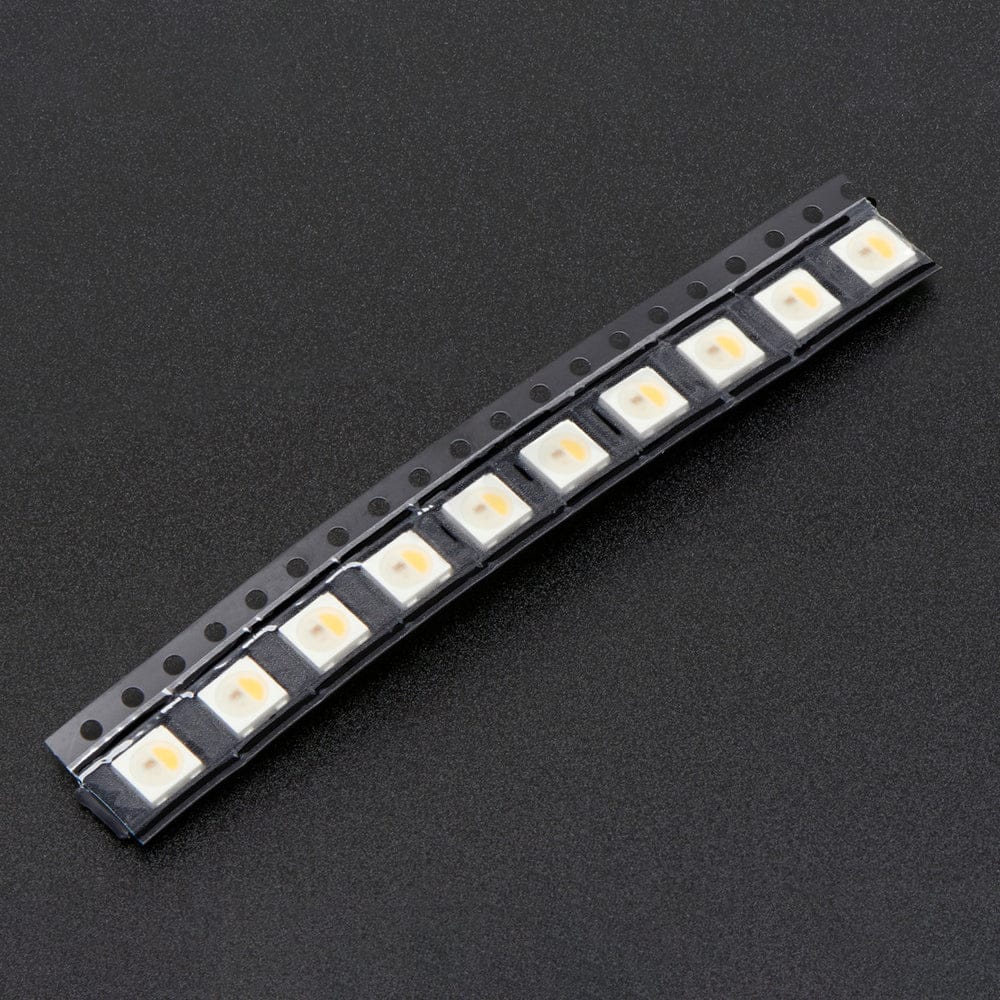
NeoPixel RGBW LEDs add warm white to full-colour lighting, with 4 channels (R/G/B/W) and 32-bit colour control. This pack includes 10 white-cased 5050 SMD LEDs using the 800kHz NeoPixel protocol—RGBW library required for correct control.
What’s better than smart RGB LEDs? Smart RGB + White LEDs of course. These NeoPixels include four LEDs in one package (red, green, blue, and white), giving you far more flexibility for lighting effects — especially when you want proper white tones alongside full colour. They use the same integrated driver found in NeoPixel strips, so you can build your own custom RGBW layouts with ease.
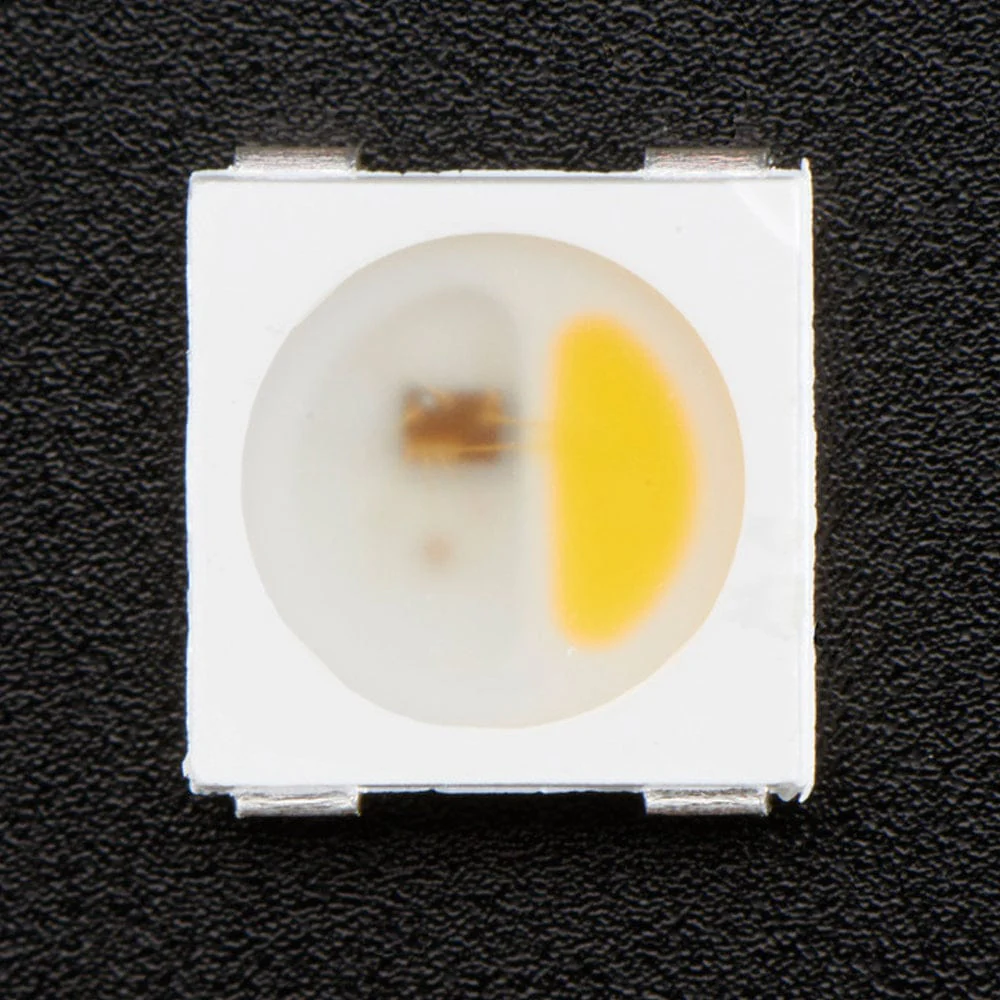
This version is RGB + Warm White with a white casing, supplied as a pack of 10 individual LEDs for you to solder into your own designs. The NeoPixel is “split” internally: one half is the RGB section, and the other is a warm white LED with yellow phosphor. When unlit it looks a bit like an egg yolk, but once powered up it’s extremely bright. Each channel has 8-bit PWM control, giving 32-bit colour overall (8 bits × 4 channels), which is ideal for mixing colourful effects with warm white highlights.
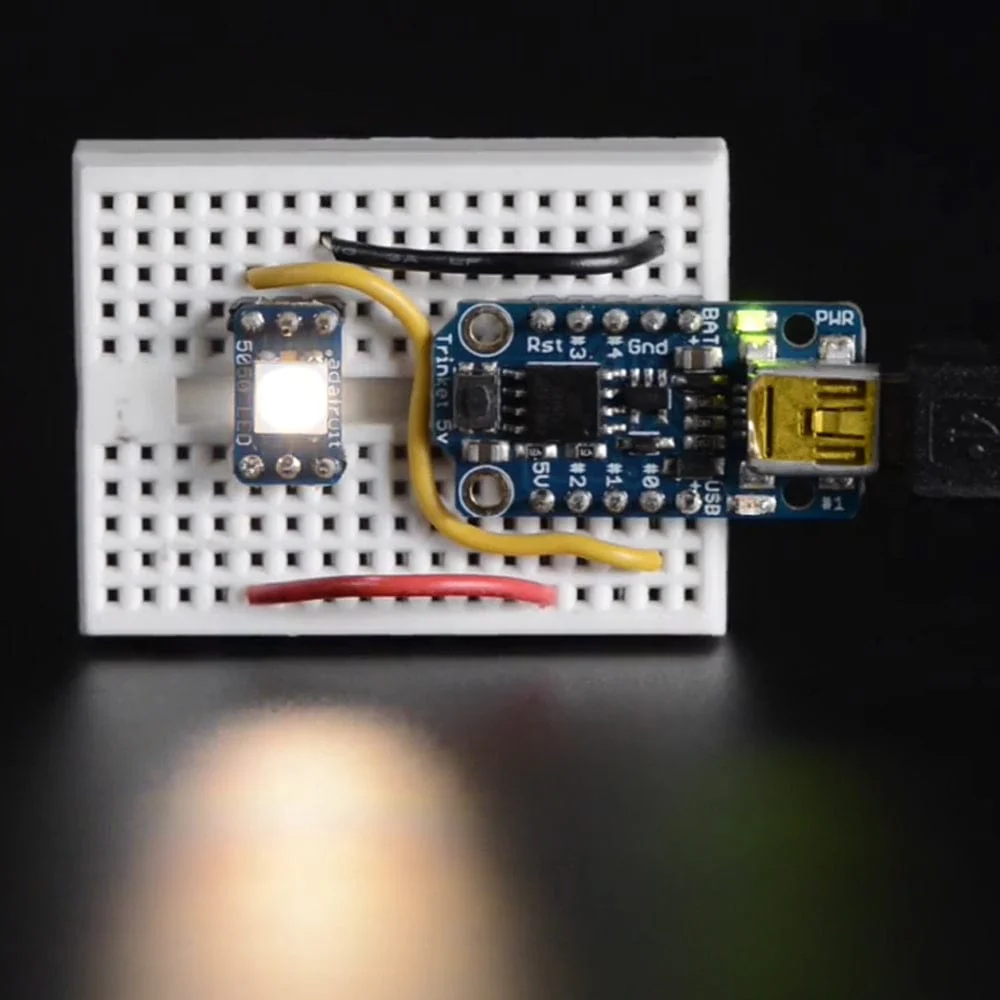
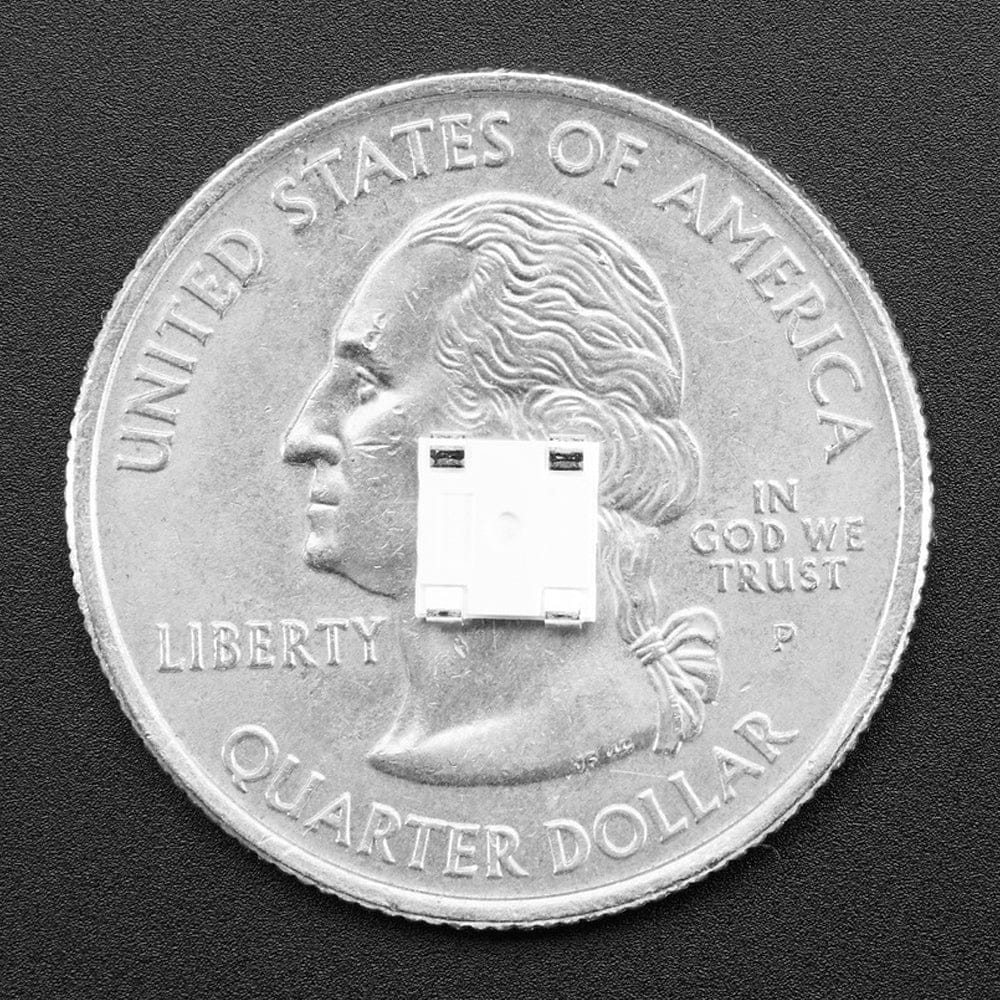
These are 5050 (5mm × 5mm) SMD LEDs, compact and fairly easy to solder. If you want to prototype them on a breadboard, using a 5050-size LED breakout PCB is a good option.
NeoPixels use the 800kHz data protocol, which needs accurate timing. Their PWM rate is 400Hz, which works well but can be noticeable if the LED is moving. For comparison, DotStars use 20kHz PWM, which gives smoother blending and avoids visible pixelation during motion (so DotStars are recommended if you can use them).
Each NeoPixel has an embedded microcontroller and works like a shift register: it reads incoming data, keeps the first chunk for itself, and passes the rest down the line. This lets you control an infinite number of LEDs by sending a long stream of data. Once the brightness values are set, the PWM runs inside the LED, so it keeps displaying without constant updates.
There’s a full tutorial available covering wiring, power calculations, and example code. Important: you’ll need a NeoPixel library that supports RGBW, otherwise you’ll get very strange results. The Adafruit NeoPixel library does support RGBW, but other libraries may need extra work. Also, because the blue LED element sits close to the white phosphor, blue light can bleed into the white, so blue may appear slightly mixed with white.
Specifications
- Single LED: 5mm x 5mm
Resources
- Datasheet
- Learn
Package Contents
- 1x 10 Pack of NeoPixel RGBW LEDs w/ Integrated Driver Chip - Warm White - ~3000K - White Casing
Description
NeoPixel RGBW LEDs add warm white to full-colour lighting, with 4 channels (R/G/B/W) and 32-bit colour control. This pack includes 10 white-cased 5050 SMD LEDs using the 800kHz NeoPixel protocol—RGBW library required for correct control.
What’s better than smart RGB LEDs? Smart RGB + White LEDs of course. These NeoPixels include four LEDs in one package (red, green, blue, and white), giving you far more flexibility for lighting effects — especially when you want proper white tones alongside full colour. They use the same integrated driver found in NeoPixel strips, so you can build your own custom RGBW layouts with ease.
This version is RGB + Warm White with a white casing, supplied as a pack of 10 individual LEDs for you to solder into your own designs. The NeoPixel is “split” internally: one half is the RGB section, and the other is a warm white LED with yellow phosphor. When unlit it looks a bit like an egg yolk, but once powered up it’s extremely bright. Each channel has 8-bit PWM control, giving 32-bit colour overall (8 bits × 4 channels), which is ideal for mixing colourful effects with warm white highlights.
These are 5050 (5mm × 5mm) SMD LEDs, compact and fairly easy to solder. If you want to prototype them on a breadboard, using a 5050-size LED breakout PCB is a good option.
NeoPixels use the 800kHz data protocol, which needs accurate timing. Their PWM rate is 400Hz, which works well but can be noticeable if the LED is moving. For comparison, DotStars use 20kHz PWM, which gives smoother blending and avoids visible pixelation during motion (so DotStars are recommended if you can use them).
Each NeoPixel has an embedded microcontroller and works like a shift register: it reads incoming data, keeps the first chunk for itself, and passes the rest down the line. This lets you control an infinite number of LEDs by sending a long stream of data. Once the brightness values are set, the PWM runs inside the LED, so it keeps displaying without constant updates.
There’s a full tutorial available covering wiring, power calculations, and example code. Important: you’ll need a NeoPixel library that supports RGBW, otherwise you’ll get very strange results. The Adafruit NeoPixel library does support RGBW, but other libraries may need extra work. Also, because the blue LED element sits close to the white phosphor, blue light can bleed into the white, so blue may appear slightly mixed with white.
Specifications
- Single LED: 5mm x 5mm
Resources
- Datasheet
- Learn
Package Contents
- 1x 10 Pack of NeoPixel RGBW LEDs w/ Integrated Driver Chip - Warm White - ~3000K - White Casing